
What is lead generation?
Lead generation is finding or attracting potential customers and passing the promising ones to whoever sells. Done well, it gives a business a steady flow of sales conversations.
Tools our VAs use for this


Put simply, this is what lead generation is: the work of attracting or finding potential customers, collecting their contact details with their interest, and passing the promising ones to whoever sells. It can be inbound, where people find you through your website, content or referrals, or outbound, where you contact them first by email, phone or LinkedIn. Done well, it gives a business a steady flow of sales conversations; a lead generation virtual assistant can run it day to day.
On this page
What lead generation means
Lead generation sits between marketing and sales. Marketing makes people aware of you; sales turns a conversation into a customer. Lead generation is the part in the middle that turns interest into a named person you can talk to.
What a lead is
A lead is a person, or a business, who has shown interest in what you sell or who fits your ideal customer closely enough to contact. A visitor who reads your website is not yet a lead. The same visitor who fills in your contact form, rings for a quote or replies to your email is.
Types of leads
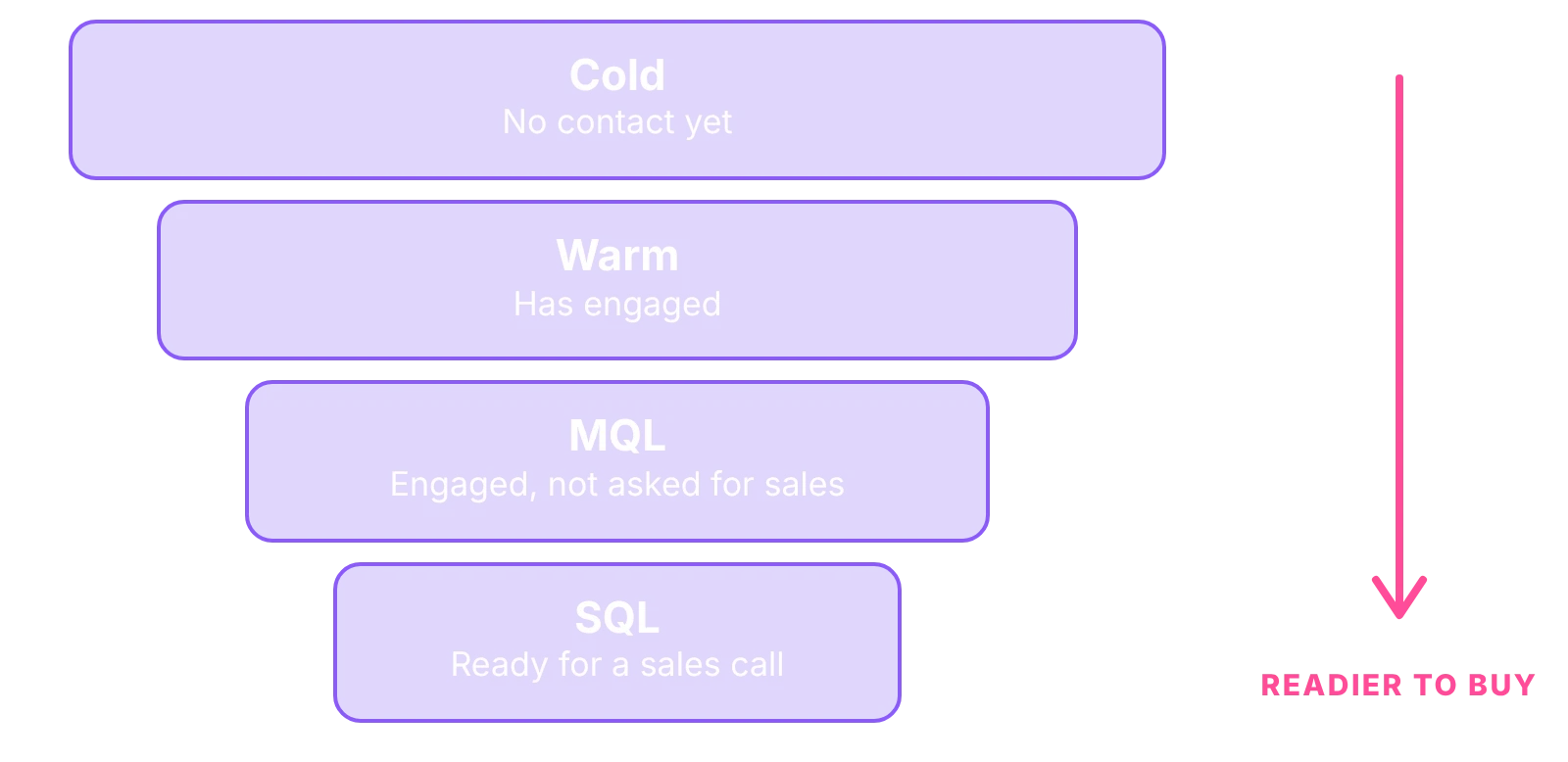
Businesses label leads in different ways, and none of the labels is official. The common ones are: a cold lead, who fits your profile but has had no contact with you; a warm lead, who has engaged, such as replying or downloading a guide; a marketing qualified lead (MQL), who fits and has engaged but has not asked to talk to sales; and a sales qualified lead (SQL), who has been checked and is ready for a sales conversation. Our guide on how to qualify leads shows how to tell them apart.
Why it matters for a business
Without lead generation, new business depends on luck and word of mouth, and arrives in bursts. A regular lead generation routine gives you a steadier flow of conversations, more choice over which customers you take on, and early warning when demand in your market changes.
How the lead generation process works
From first contact to qualified lead
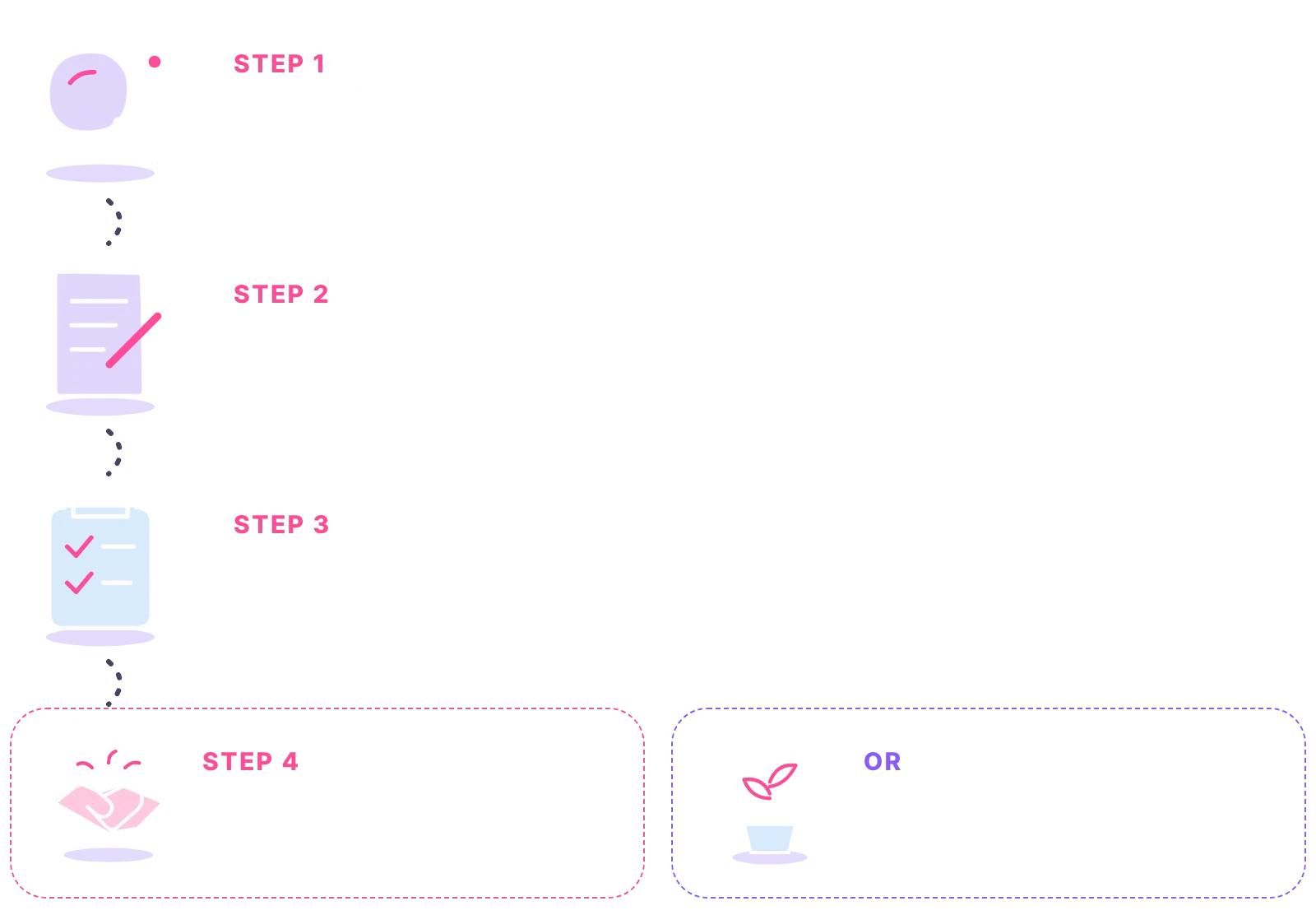
Most lead generation follows the same four steps:
- Attract or find. People find you through search, content, social media, events or referrals, or you find them by researching businesses that fit.
- Capture. You record who they are and how to reach them, with their interest: a form, a call, an email reply, a booked meeting.
- Qualify. You check whether they fit and are ready, using the same questions every time.
- Hand over or nurture. Strong leads go to whoever sells; leads that are not ready get a light follow-up until they are.
Lead generation versus demand generation
Demand generation builds awareness and interest in your market over time, often without asking for contact details. Lead generation turns that interest into named contacts. Our guide to lead generation vs demand generation compares the two side by side.
Common techniques, with examples
Common lead generation techniques are a useful website with content and search, social media and events, paid advertising, and outbound outreach by email, LinkedIn or phone. The examples below are illustrations.
Website, content and search
A useful website that answers your customers' questions, appears in search results and makes it easy to get in touch. Example: a bookkeeper publishes a guide to year-end deadlines, and readers book a call from the page.
Social media and events
Sharing useful posts where your buyers spend time, and meeting them at trade shows, networking events and local business groups. Example: a printing firm meets an office manager at a business breakfast and follows up the next morning.
Paid advertising
Search or social ads that send people to a page with a clear offer and a form. Example: a removals company runs local search ads for "office moves" and takes enquiries through a quote form.
Outbound outreach
Contacting businesses that fit your ideal customer, by email, LinkedIn or phone. Example: an IT support firm researches local accountancy practices, emails each office manager with a short, specific note, and books calls with those who reply.
Inbound and outbound compared
Inbound waits for buyers to find you and tends to build slowly; outbound reaches out first and can produce conversations sooner. Most businesses benefit from both. Our guide to inbound vs outbound lead generation covers the trade-offs in full.
Lead quality, CRM and sales alignment
More leads are not always better. A small number that fit your ideal customer usually produce more sales than a large number that do not. Keep every lead in one CRM with its source, last contact and next step, and agree with whoever sells what a good lead looks like. If you run a smaller firm, lead generation for small business applies these ideas at that scale.
UK rules on lead generation
Lead generation is legal in the UK, provided you follow the rules on marketing and personal data. Few guides on this topic mention the law, so here are the main points in plain English. This is general information, not legal advice.
PECR, TPS and UK GDPR in plain English
According to the ICO's guidance on collecting information and generating leads, lead generation must be fair, lawful and transparent. If you enrich data about people, you need to tell them, and if you buy a list, you must do proportionate checks and due diligence before you get it, including asking the seller for evidence of how the data was collected and screened. Then screen the numbers against the TPS and CTPS again yourself before you call, because the business making the calls is the one that must screen.
The ICO's business-to-business marketing guidance, which it says is under review following the Data (Use and Access) Act, adds that the PECR rules on marketing emails do not apply to companies but do apply to sole traders. A business that wants to make live marketing calls must check the numbers against the TPS and CTPS registers first, under regulation 21 of PECR. People can object to direct marketing at any time, and you must stop when they do.
How to measure results
Track a few numbers every week, by channel: leads, qualified leads, meetings and new customers, plus the time and money each channel cost. If someone runs the work for you, ask for the same figures; how a VA reports lead generation results shows what to expect.

Cost per lead and ROI
Cost per lead is what a channel cost you in a period divided by the leads it produced. Cost per customer is the same cost divided by the customers it produced, and matters more. ROI is the revenue from those customers, less the cost of winning them, divided by that cost. Judge each channel over a full sales cycle.
What lead generation costs
We could not find an official or independent source for typical UK lead generation costs, so this guide does not quote a market figure. Agencies price in different ways, such as a monthly retainer, a fee per lead or a fee per booked meeting. Doing it yourself costs your time; hiring in costs salary and overheads. The fairest comparison between routes is cost per new customer.
Who runs lead generation: in-house, agency or VA
What lead generation companies do
A lead generation company finds and contacts potential customers for other businesses. Some sell lists or leads; others run outreach campaigns or book meetings into a client's diary.
Is lead generation a form of BPO?
Sometimes. BPO (business process outsourcing) means handing a business task to an outside provider, and outsourced lead generation is one example. Plenty of lead generation is still done in-house.
Getting help from a virtual assistant
A dedicated lead generation VA works your routine every day, in your own tools: lists, outreach, follow-ups, booking meetings and CRM updates. At Ant Assist your VA is one dedicated person, never shared, who works full time from our own managed office in Cairo, where they are recruited, managed and supervised; they are not freelancers and not AI. The service is UK-managed and works UK business hours, 9am to 5pm Monday to Friday. Rates start at £5 per hour on the introductory rate for the first 6 months on the Entry tier; after the promotion, lead generation on the Entry tier is £5.50 per hour full time (£880 a month) or £6.50 per hour part time (£520 a month). The calculator compares that with an in-house hire, and our guide on how to hire a VA for lead generation covers the choice.



Lead generation FAQs
Didn't find your answer? Browse more common questions in the Help Center.
A steady flow of sales conversations.
One dedicated lead generation VA, from £5 per hour. Book a call.