
How to qualify leads
A qualified lead fits the customer you serve best and has a real need, budget, authority and a reason to act soon. Score every lead on the same questions.
Tools our VAs use for this


To qualify a lead, check two things: does the person and their business fit the customer you serve best, and do they have a real need, a budget, the authority to act and a reason to act soon. Ask the same few questions of every lead, score the answers on a simple scorecard, and act on the score: pass strong leads to the person who sells, nurture the ones that fit but are not ready, and close the rest politely. Consistent qualification, done by you or by a lead generation VA, is the cheapest way to protect your selling time.
On this page
What lead qualification is
Lead qualification is the step between getting a lead and selling to it. You gather a few facts about the lead, compare them with a standard you have set in advance, and decide what happens next. Our guide to what is lead generation covers how leads arrive in the first place.
Qualified and unqualified leads
A qualified lead fits your ideal customer and has shown that it could buy within a time frame that matters to you. An unqualified lead is missing something important: the wrong size of business, no budget, no real need, or nobody with the authority to say yes. Many unqualified leads are simply early, so record why each one did not qualify.
MQLs, SQLs and PQLs
These three labels are common in sales and marketing, with no official definition. A marketing qualified lead (MQL) has engaged with your marketing, such as downloading a guide or attending a webinar, and fits your profile, but has not asked to talk to sales. A sales qualified lead (SQL) has been checked against your criteria and is ready for a sales conversation. A product qualified lead (PQL) is used by businesses with a free trial or free version: someone whose use of the product shows they are likely to buy. A small team rarely needs all three; most need a clear line between "worth a call now" and "not yet".
Why qualification matters
Lead qualification matters because in a small business the person who sells is usually also the person who delivers, quotes and runs the business. Qualification costs time, but every hour spent on a lead that was never going to buy is an hour lost from one that would have. Qualification also improves your marketing, because the reasons leads fail tell you where your messaging or targeting is off. And it is kinder to the lead: a clear "this is not the right fit" saves both sides a wasted meeting.
The qualification process, step by step
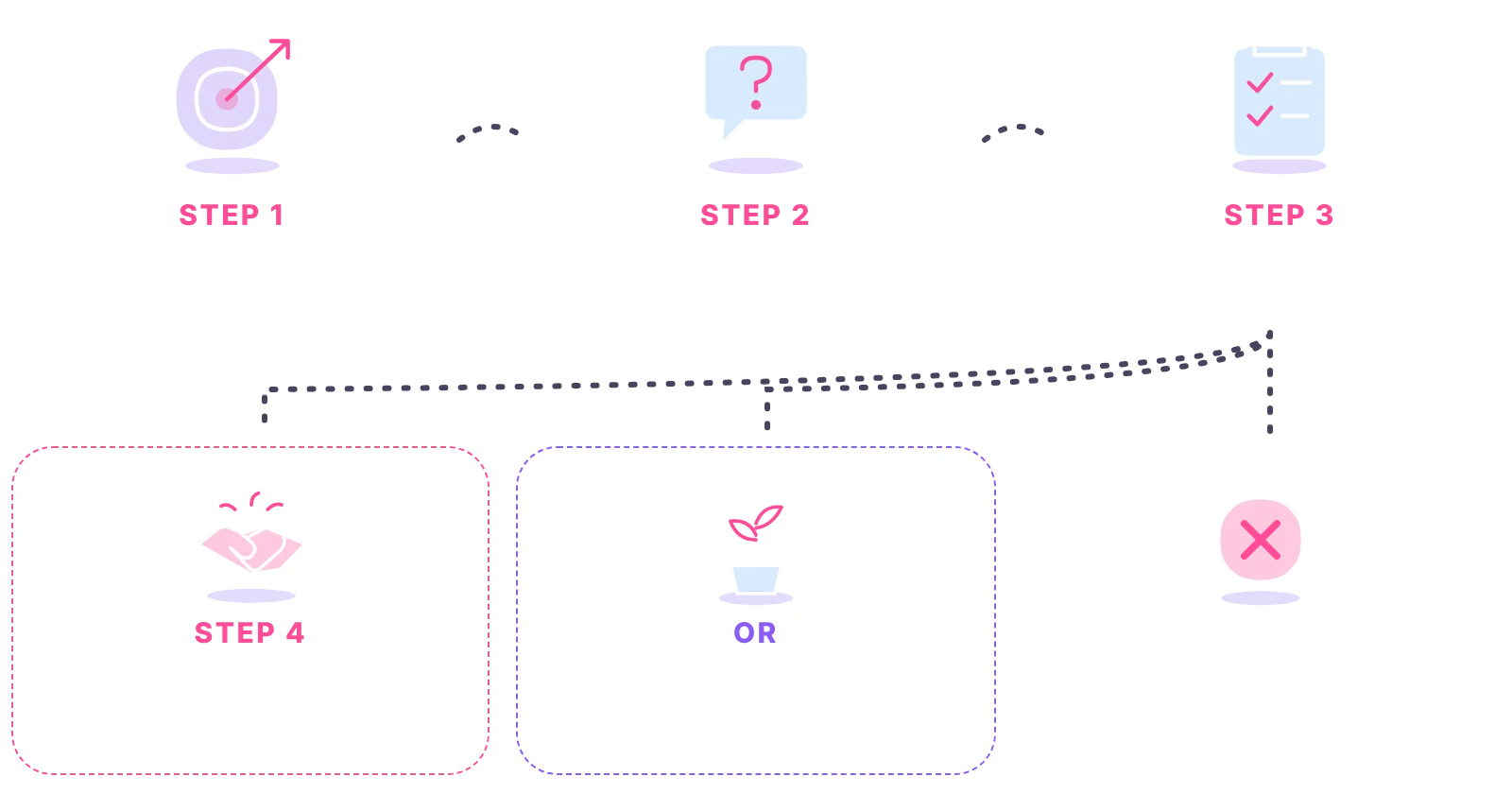
Qualify leads in four steps: define your ideal customer profile, set the qualifying questions, score each lead and decide, then hand it over or nurture it.
Define your ideal customer profile
Write down the customers you serve best and profitably: sector, size, location, the problem they bring you and the role of the person who buys. Look at your best existing customers to find the pattern, and at your worst ones for the warning signs. Our guide to lead list building and CRM data shows how to turn that profile into a list and the fields to hold it in.
Set the qualifying questions
Choose four to six questions that tell you whether a lead fits and whether it is ready. Keep them conversational. For outreach messages that open with these questions, use LinkedIn outreach message templates for B2B. For example:
- What prompted you to get in touch now?
- What are you using or doing at the moment, and what is not working?
- Who else is involved in the decision?
- Have you set aside a budget, or a range you are working to?
- When would you want this in place?
Use the same questions for every lead, whether it arrives by form, phone, email or outreach, so that leads can be compared fairly. For inbound leads, put the most important two or three on your contact form; for outbound leads, ask them in the first conversation. For outbound leads that start on LinkedIn, see our LinkedIn lead generation strategy guide.
Score and decide
Score each answer against the scorecard below, add up the result, and apply the rule you set in advance. The rule matters more than the scale: everyone who qualifies leads in your business should reach the same decision on the same answers.
Hand over or nurture
A lead that qualifies goes to the person who sells, with the answers attached, so the first sales call starts from what the lead has already said. A lead that fits but is not ready goes into a nurture list with a date to check back. A lead that does not fit is closed politely, with the reason recorded in your CRM.
Qualification frameworks compared
BANT suits simple sales with one main decision maker, CHAMP suits selling that starts from the buyer's problem, and MEDDIC suits larger, longer sales with several people involved. Frameworks are checklists of what to find out. None is official, and all are adapted freely by the businesses that use them. These are the ones most guides on this topic describe.
| Framework | What it checks | Best for |
|---|---|---|
| BANT | Budget, authority, need, timing | Simple sales with one main decision maker |
| CHAMP | Challenges, authority, money, prioritisation | Selling where the buyer's problem is the starting point |
| MEDDIC | Metrics, economic buyer, decision criteria, decision process, identified pain, champion | Larger, longer sales with several people involved |
BANT
BANT asks whether the lead has a budget, whether you are talking to someone with the authority to buy, whether there is a real need, and whether the timing works. It is quick to learn and suits a small team. Its weakness is that asking about budget too early can feel abrupt, so most teams ask it in their own words later in the conversation.
CHAMP
CHAMP covers similar ground in a different order, starting with the lead's challenges. It suits a business whose buyers often do not yet know what they need to spend, because it opens with the problem and leaves the money until later.
MEDDIC and others
MEDDIC and its variants are built for complex sales with several decision makers and long cycles. They ask what results the buyer will measure, who controls the money, how the decision will be made and who inside the business is championing you. Most small teams find them too heavy for every lead, but useful for their largest opportunities.
Choosing a framework
Start with BANT or CHAMP, adapted to your business. Change the wording so it sounds like you, add the one question that matters most in your market, and drop anything you never act on. A framework you use on every lead is worth more than a better one you use on some.
A one-page qualification scorecard
A one-page qualification scorecard rates each lead from 0 to 2 points on fit, need, authority, budget and timing, and the total decides whether you pass, nurture or close it. Copy this scorecard into a document or your CRM and adjust the criteria to your business. The point values are an example scale.
Excel scorecard for fit, need, authority, budget and timing, with automatic totals and a lead log (.xlsx, Excel, 54 KB)
| Criterion | 0 points | 1 point | 2 points |
|---|---|---|---|
| Fit: sector and size | Outside your profile | Close to your profile | Matches your profile |
| Need | No clear problem | Problem, not a priority | Clear problem they want fixed |
| Authority | No access to the decision maker | Influences the decision | Makes the decision |
| Budget | No budget or far below your price | Budget unclear | Budget in your range |
| Timing | No time frame | Within the next few quarters | Soon |
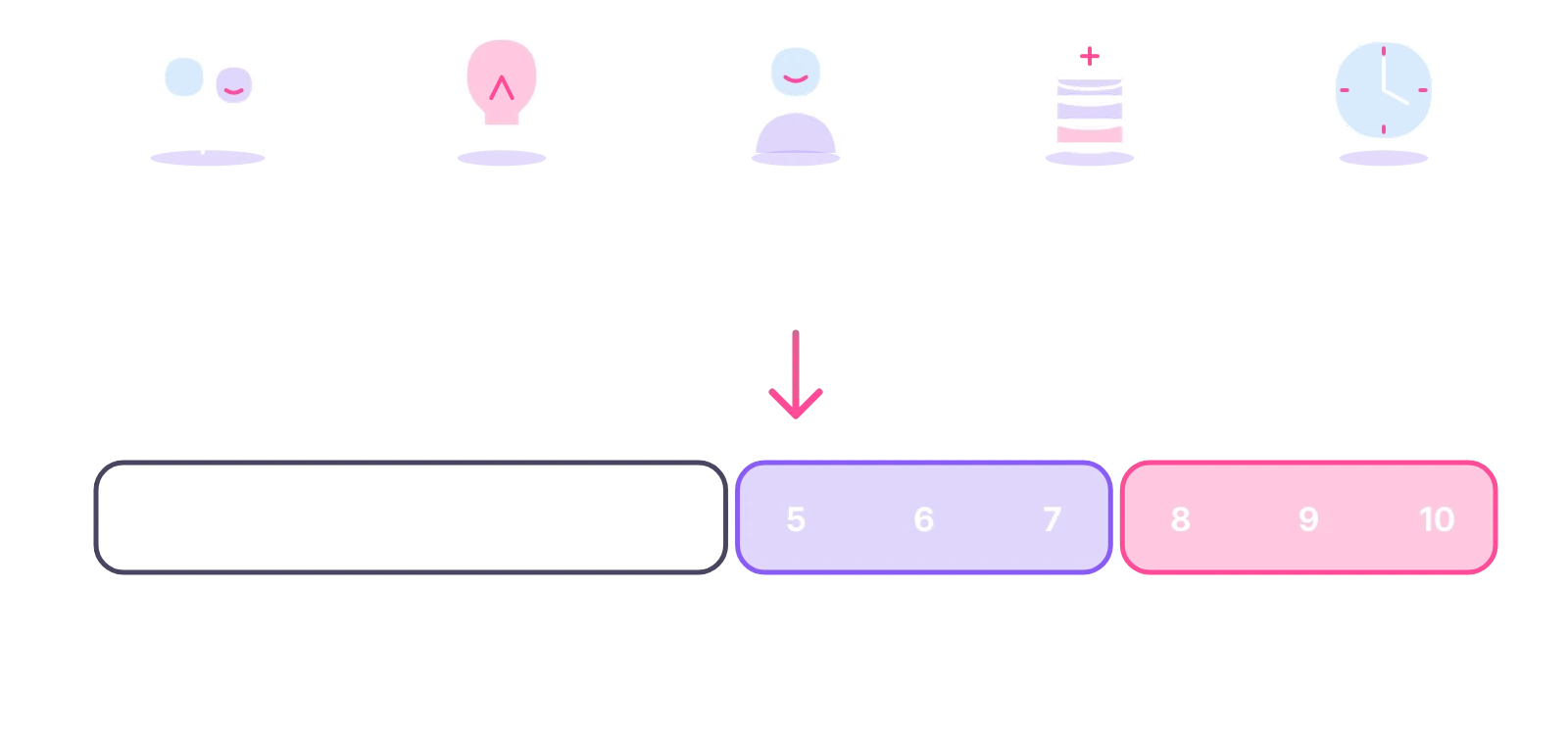
Example decision rule: 8 or more, pass to the person who sells the same day; 5 to 7, nurture and check back on a set date; 4 or under, close politely and record the reason.
Before you call it qualified, check:
- The answers are written in the CRM, in the lead's own words where possible.
- You know who else is involved in the decision.
- The next step has a date, whoever owns it.
- If the lead did not qualify, the reason is recorded.
Tools, data and automation
CRM fields
Hold the scorecard in your CRM as fields, one per criterion, plus a total, a status (qualified, nurture, closed) and a reason. That lets you filter the nurture list, see which sources produce qualified leads, and spot criteria that nobody fills in. Review the scorecard every few months against the deals you actually won, and change the criteria that do not predict them.
AI and chatbots
A chatbot or form can ask your qualifying questions at any hour and route leads by their answers, and AI tools can summarise call notes or research a company before a call. They cannot reliably judge the things that matter most in a small business sale, such as whether the person is the real decision maker or whether a vague answer hides a real need. Use automation to gather facts and a person to make the call.
Common challenges
The most common problems are criteria that nobody agreed in writing, scorecards that are filled in for some leads and not others, and qualified leads that wait days for a call. Fix the first by writing the scorecard down, the second by making the fields required in your CRM, and the third by setting a rule for how fast a qualified lead gets a reply.
Nurturing leads that are not ready
A lead that fits but is not ready is a future customer. Give each one a check-back date, send something useful in between, and re-qualify when they get in touch or when their circumstances change. Many good customers first qualified as "not yet".
Lead data and UK GDPR
Qualification usually means collecting and enriching information about people, so data protection applies. This is general information, not legal advice.
Enriching and scoring contacts
According to the ICO's business-to-business marketing guidance, named business contacts are personal data under UK GDPR, even in a business context. The ICO marks that page as under review following the Data (Use and Access) Act, so check it before you rely on it. The ICO's guidance on collecting information and generating leads says that if you enrich data about people when generating or scoring leads, you must tell them and keep the processing fair, lawful and transparent. In practice, collect only what you use to qualify, say in your privacy notice what you do with it, and delete what you no longer need. How we handle it is set out in how is lead data kept secure.
Who does the first qualification pass
What a virtual assistant or SDR handles
The first pass is repeatable: ask the agreed questions, record the answers, score them and route the lead. That makes it a good task to hand over to a lead generation VA or an outsourced SDR, once your scorecard is written down. They can qualify inbound enquiries the same day, ask the questions on outreach calls, and book qualified leads straight into your diary. The appointment setting and outsourced SDR pages show how that works, and our guide to the virtual sales assistant covers sales support more widely.

At Ant Assist your VA is one dedicated person, never shared, who works full time from our own managed office in Cairo, where they are recruited, managed and supervised; they are not freelancers and not AI. The service is UK-managed and works UK business hours, 9am to 5pm Monday to Friday. If the fit is wrong, we replace the VA without restart cost. Your VA works in your CRM through password managers, under NDAs and data-processing agreements, with access you can revoke. A dedicated VA starts at £5 per hour on the introductory rate, for the first 6 months on the Entry tier; after the promotion, lead generation on the Entry tier is £5.50 per hour full time (£880 a month) or £6.50 per hour part time (£520 a month). The calculator compares that with an in-house hire, and our guide on how to hire a VA for lead generation covers the choice.
When to take over
You take over at the sales conversation: the lead has qualified, the answers are in the CRM and the meeting is in your diary. You also own the scorecard itself, and any lead the VA flags as unclear.



Lead qualification FAQs
Didn't find your answer? Browse more common questions in the Help Center.
Spend your time on leads that buy.
A dedicated VA qualifies every lead, from £5 per hour. Book a call.