
Inbound vs outbound lead generation: where a VA fits
Inbound lead generation brings buyers to you; outbound goes to them. Start with inbound if enquiries arrive but are answered slowly, and outbound if there are too few.
Tools our VAs use for this


Inbound brings buyers to you; outbound goes to them. A VA does the same back-office work in both: fast replies, qualifying, booking the call and follow-up.
| Approach | When it fits |
|---|---|
| Start with inbound | If you already have enquiries you are answering slowly |
| Start with outbound | If you do not have enough enquiries to answer |
Inbound and outbound need the same back office: someone to respond fast, qualify against a profile, book the call, keep the CRM true and follow up until the lead answers or dies. In inbound, the VA is the speed and the follow-through you do not have when a form arrives at four in the afternoon on a Friday. In outbound, the VA is the list, the sequence, the LinkedIn work and the booking that a founder or a salesperson never has time to do properly. A dedicated VA from Ant Assist does either from £5 per hour on the entry rate. Both motions are day-to-day work for a lead generation virtual assistant.
On this page
How the two motions differ
Inbound lead generation starts with the buyer's action, such as a form, call or chat, while outbound starts with yours, such as research, cold email, LinkedIn prospecting or cold calling. Inbound is every lead that starts with the buyer's action: a website form, a phone call, a live chat, a demo request, a reply to your newsletter, a referral that lands in your inbox. The marketing that generates inbound (content, search, ads, referrals) is a separate job; what this guide covers is what happens after the lead arrives, because that is where inbound is won or lost. Readers new to the term can start with what is lead generation before the detail here.
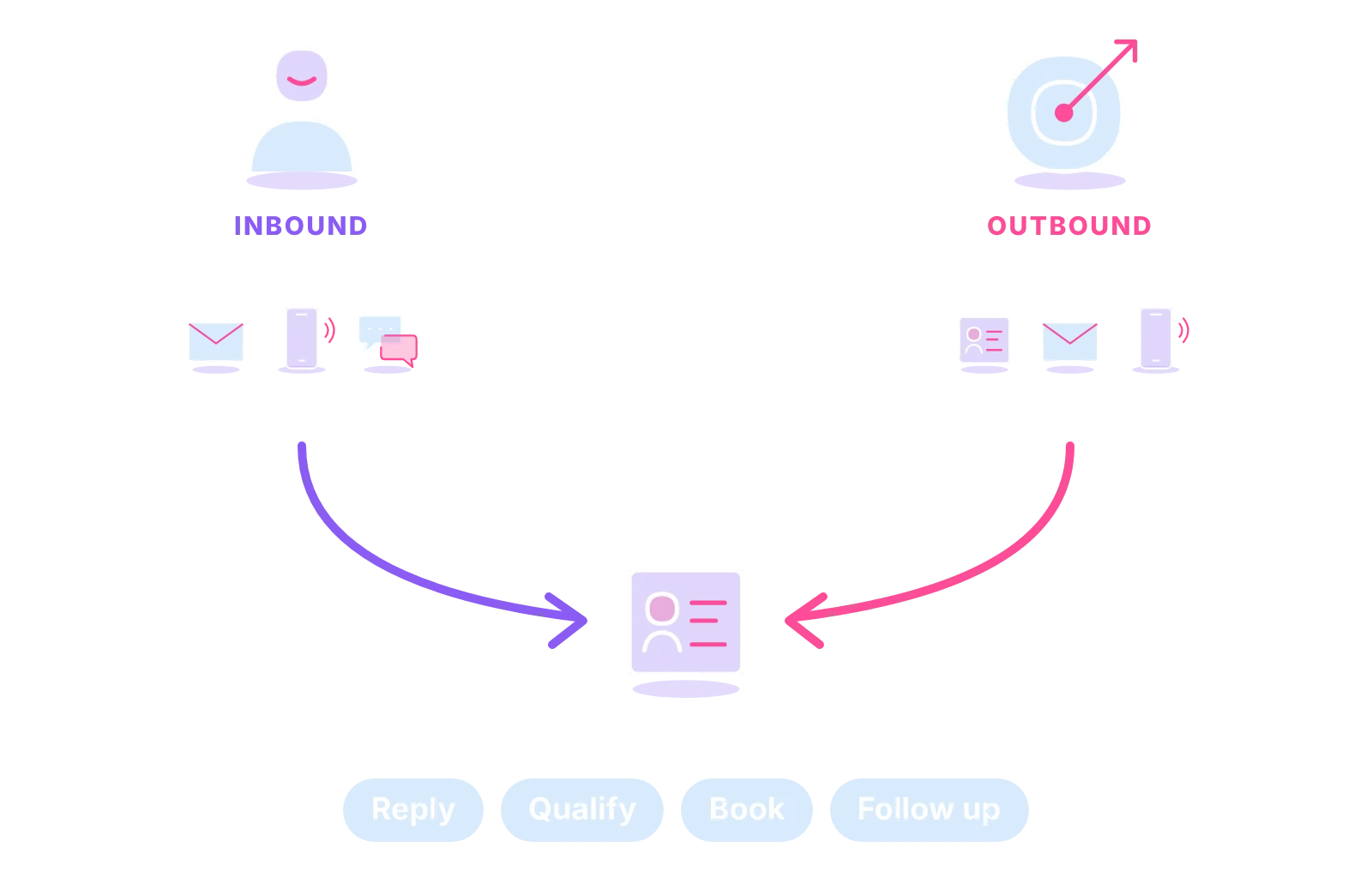
Outbound is every lead that starts with your action: prospect research against an ideal customer profile, cold email sequences, LinkedIn prospecting, cold calling and the follow-ups that turn a reply into a meeting. Outbound is a production line with stages, and each stage is work someone has to do every day.
The two are not exclusive. Most businesses that grow run both, and the same VA can support both from the same CRM.
VA tasks in inbound lead generation
In inbound lead generation, a VA handles speed to lead, qualification, booking, CRM hygiene and nurturing. Speed to lead. An inbound lead is warmest in the minutes after it arrives. A VA working your hours answers the form, the chat or the call the moment it lands, acknowledges it in your voice and asks the qualifying questions, so the buyer hears from a person before they hear from your competitor.
Qualification. Not every enquiry is a lead. Your VA scores each one against the profile you agreed, routes the qualified ones to you or your salesperson with the context written up, and handles the rest politely: the wrong-fit enquiry, the supplier pitch, the student project.
Booking. Your VA manages the booking link, offers times inside your rules, sends the prep materials and confirms attendance the day before, which is the difference between a diary of meetings and a diary of no-shows.
CRM hygiene. Every inbound lead entered with its source, every conversation logged, every stage kept true, so you can see which marketing is producing buyers and which is producing noise.
Nurturing. The enquiry that was not ready this month gets a sequenced follow-up next month and the month after. Lead nurturing is the inbound task most often abandoned, because it is nobody's job until it is a VA's.
VA tasks in outbound lead generation
In outbound lead generation, a VA builds the prospect list, runs cold email sequences and LinkedIn outreach, makes calls where your market answers the phone and books the meetings. The list. Prospect research against your ideal customer profile, sourced from LinkedIn, industry databases and your existing CRM, verified and entered properly. Our guide to lead list building by a virtual assistant covers what good looks like.

The sequence. Multi-step cold email in your tools and your messaging, drafted to your tone and reviewed by you before it goes live, then run every day with the replies triaged and the bounces cleaned.
LinkedIn. Connection requests, follow-up messages and engagement with prospects' content to warm them before outreach, run from your account or a connected tool under your brand.
The call. Where your market answers the phone, an outsourced cold calling UK campaign puts a dedicated caller on your list with your script; the same discipline of profile, list and CRM applies.
The booking. Replies become meetings only if someone qualifies the interested prospect, books the slot, sends the prep and confirms the day before. That is appointment setting virtual assistant work, and it is where outbound most often leaks.
Choosing which motion to start with
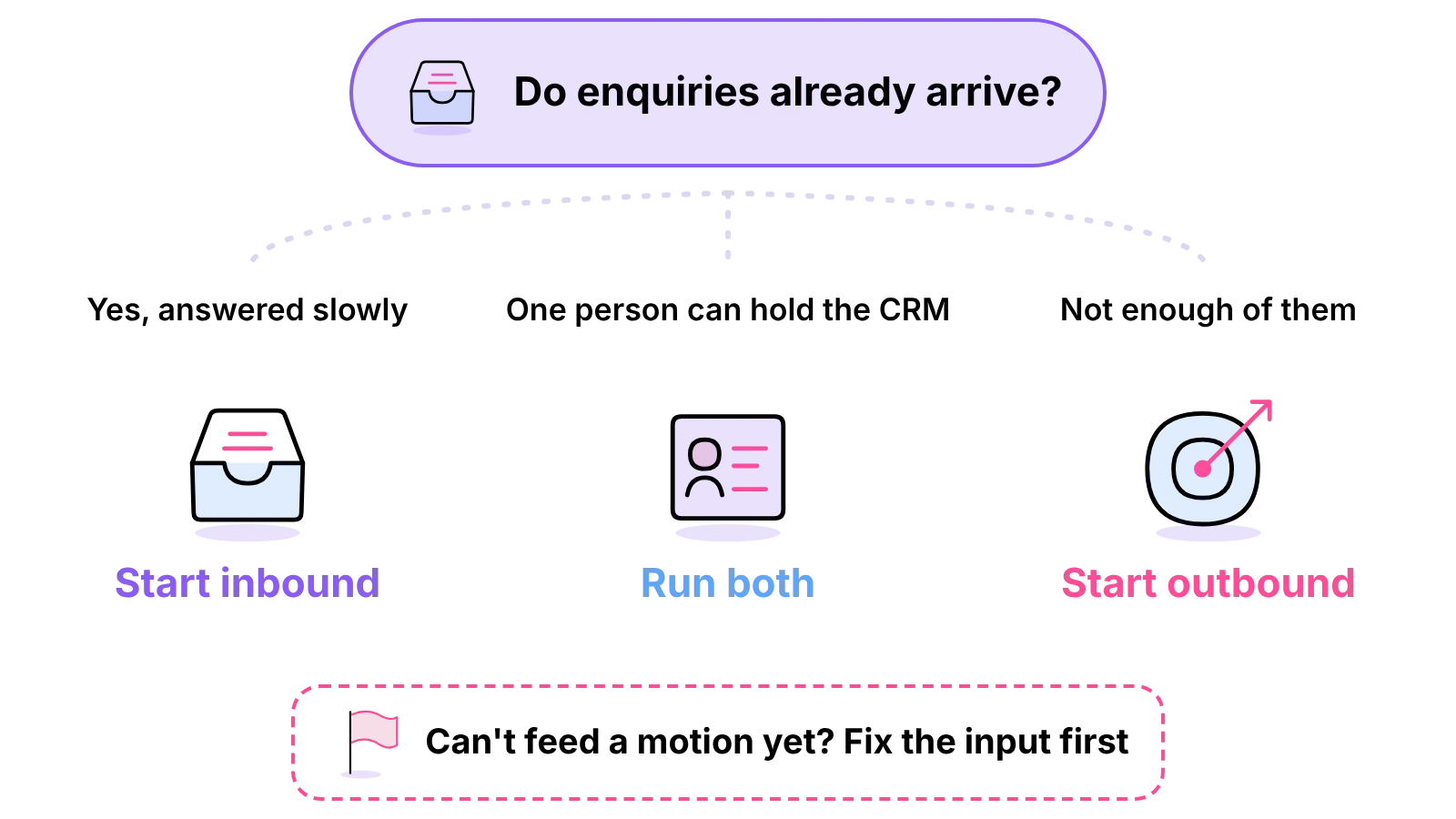
Start with inbound if enquiries already arrive and are answered slowly. The signs: forms answered the next day, calls going to voicemail, a booking link nobody manages, a CRM where the last activity is weeks old. A part-time VA on speed to lead, qualification and booking pays back fastest of anything in this guide, because the leads already exist.
Start with outbound if you do not have enough enquiries to answer. The signs: revenue depends on referrals and a founder's network, the marketing is planned but not running, the ideal customer is known but nobody is contacting them. A VA on list building, sequences and LinkedIn gives you a predictable flow to answer, and the same VA handles the replies. For the outreach side in practice, see our guide to B2B lead generation tips for small teams.
Run both when one person can hold the CRM for both. The common case for a small team: a VA who answers inbound in the morning and runs outbound in the afternoon, from one pipeline, with one weekly report. The CRM is what makes it one job instead of two.
Do not start with the motion you cannot feed. Outbound without a written ideal customer profile produces a list of strangers; inbound without any marketing produces a VA waiting for a form. Fix the input first, then hire for the process; our guide on how to hire a VA for lead generation covers the steps.
The cost of a VA across both motions
A managed lead generation VA from Ant Assist starts at £5 per hour on the entry rate: the first 6 months on the Entry tier, 3 months on Mid, 1 month on Expert. After the promotion, the lead generation rate card applies: £5.50 per hour full time on the Entry tier (160 hours a month, £880) or £6.50 per hour part time (80 hours a month, £520), with Mid at £6.33 and Expert at £6.88 per hour full time for assistants with longer experience. There are no platform fees on top, and the rate includes the assistant's time, our office facilities in Cairo, and the supervision and management that keep quality up. Your CRM and outreach tools are yours and stay in your name.
The motion sets the hours. Inbound response and booking for a business with a steady flow of enquiries is usually part-time work; a full outbound production line, list to sequence to LinkedIn to booking, is a full-time role; both together for a growing team is full time with the CRM as the spine. For the comparison against a UK employee, line by line, read how much a virtual assistant costs in the UK or put your own hours into the calculator.
What the £5/hour entry rate includes
- Dedicated VA, never shared
- UK-hour aligned support
- Management and supervision included
- Recruitment and onboarding included
- Office infrastructure included
- VA replacement available
- No NI, pension, or holiday costs
- 3-month probation, no penalty to leave
Getting lead generation help from a VA
A VA fits the process work of both motions: everything between a lead existing and a meeting happening. It does not replace the marketing that creates inbound demand or the salesperson who closes, and a business without either still needs them. What it removes is the reason most lead generation fails in small companies, which is that the daily work of responding, qualifying, booking, logging and following up belongs to nobody. At Ant Assist that work belongs to one named person, on your hours, under your brand, with a UK team supervising quality, and if the fit is wrong we replace the VA and carry the handover. That process work is what our outsourced lead generation service covers.



Inbound and outbound FAQs
Didn't find your answer? Browse more common questions in the Help Center.
Give the pipeline an owner.
One dedicated lead generation VA, from £5 per hour. Book a free 15-minute call.