
What is an SDR?
An SDR, or sales development representative, finds and qualifies potential customers and books meetings for someone else to close. They are measured on qualified meetings, not closed revenue.
Tools our VAs use for this


SDR stands for sales development representative. An SDR prospects for new customers by phone, email and LinkedIn, qualifies the people who respond, and books meetings for an account executive or the business owner to close. SDRs are measured on qualified meetings and pipeline created, not on closed revenue. In a small business, one SDR can keep the top of the sales pipeline moving while you spend your time on selling and delivery. If you want the prospecting done for you, outsourced lead generation is one route.
On this page
What SDR means
What does SDR stand for?
SDR stands for sales development representative, sometimes shortened to sales development rep. "Sales development" is the work that comes before a sale: identifying who might buy, getting their attention and confirming that a conversation is worth having. The SDR owns that stage.
If you want to see what an SDR is when the role is run for you by a dedicated person, our outsourced SDR page sets it out. This guide explains the role itself, wherever it is based.
SDR, BDR and account executive compared
A BDR (business development representative) does very similar work, and many companies use the titles interchangeably. Where they differ, the SDR tends to qualify inbound interest and the BDR tends to prospect outbound into new accounts; our guide to SDR vs BDR covers the detail.
An account executive (AE) is the person who takes the meeting the SDR books, runs the sales conversation and closes the deal. The SDR opens doors; the AE walks the buyer through them.
What an SDR does day to day
Prospecting, outreach and qualifying
Most of an SDR's day is outreach:
- Research: finding companies that fit your ideal customer profile and the right contact in each, then checking the details in the CRM
- Outreach: calling, emailing and messaging on LinkedIn in a planned sequence, usually several touches over a few weeks
- Follow-up: coming back to prospects who said "not now" or asked for information
- Qualifying: asking the questions you agree, such as whether there is a need, who decides and what the timescale is
For outbound calling run as a service, see our outsourced cold calling page.
Booking meetings and handing over to sales
When a prospect qualifies, the SDR books a meeting in the AE's or owner's calendar and writes a short handover: who the prospect is, what they said, what problem they want solved and why they agreed to talk. A good handover means the seller does not start from zero. The SDR then confirms the meeting, sends a reminder and rebooks any that are missed. This booking work is the same job an appointment setter does; our appointment setting page covers it as a service.
Performance metrics
- Activity: calls made, emails sent, conversations held
- Meetings booked, and meetings that actually took place
- Meetings accepted by the AE as qualified
- Pipeline created: the value of opportunities that came from the SDR's meetings
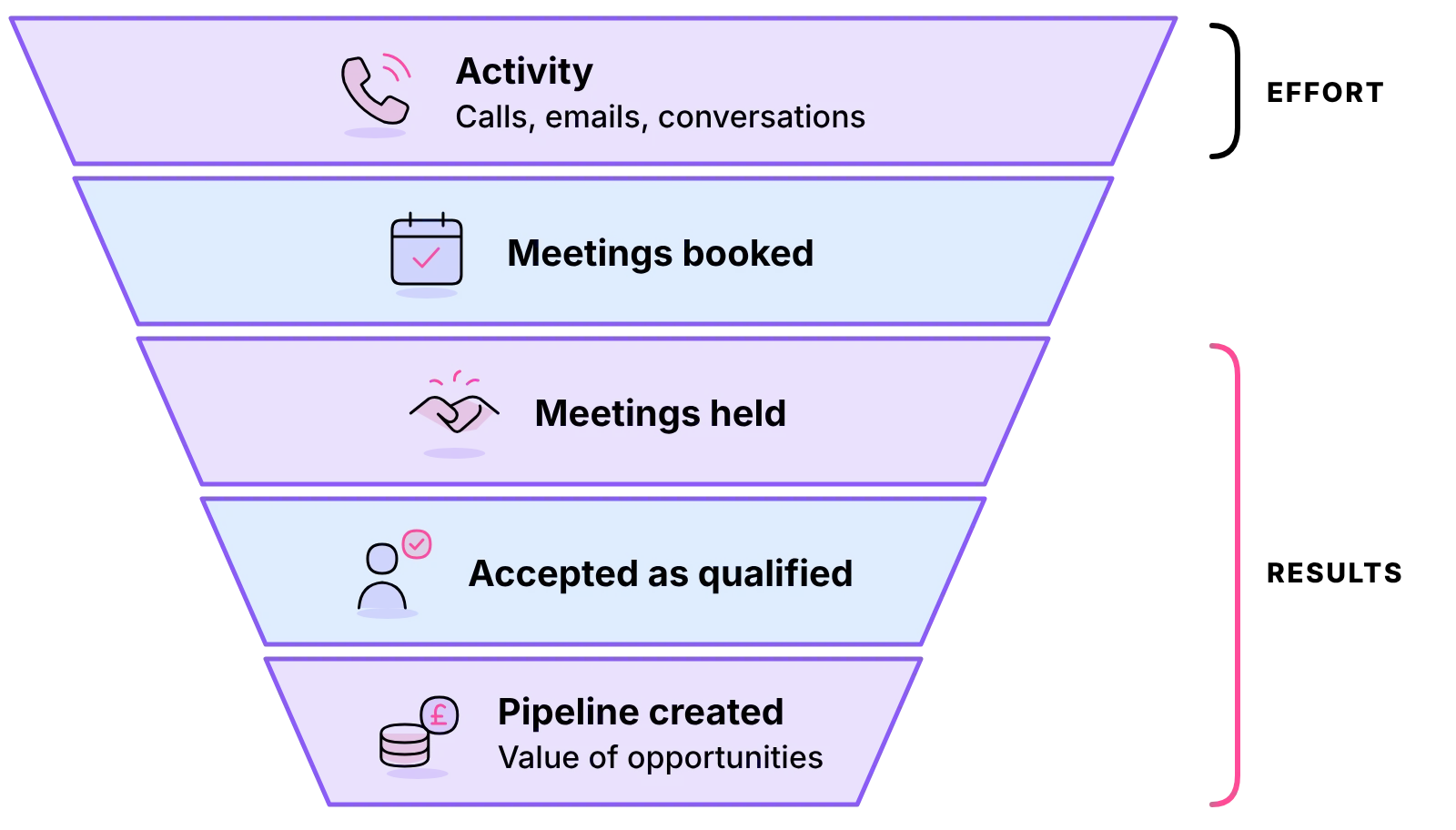
Activity shows effort; qualified meetings that take place show results. Agree which you will judge the role on; our FAQ on how a VA reports lead generation results shows what a weekly report can look like.
Types of SDR and team structure
Inbound and outbound SDRs
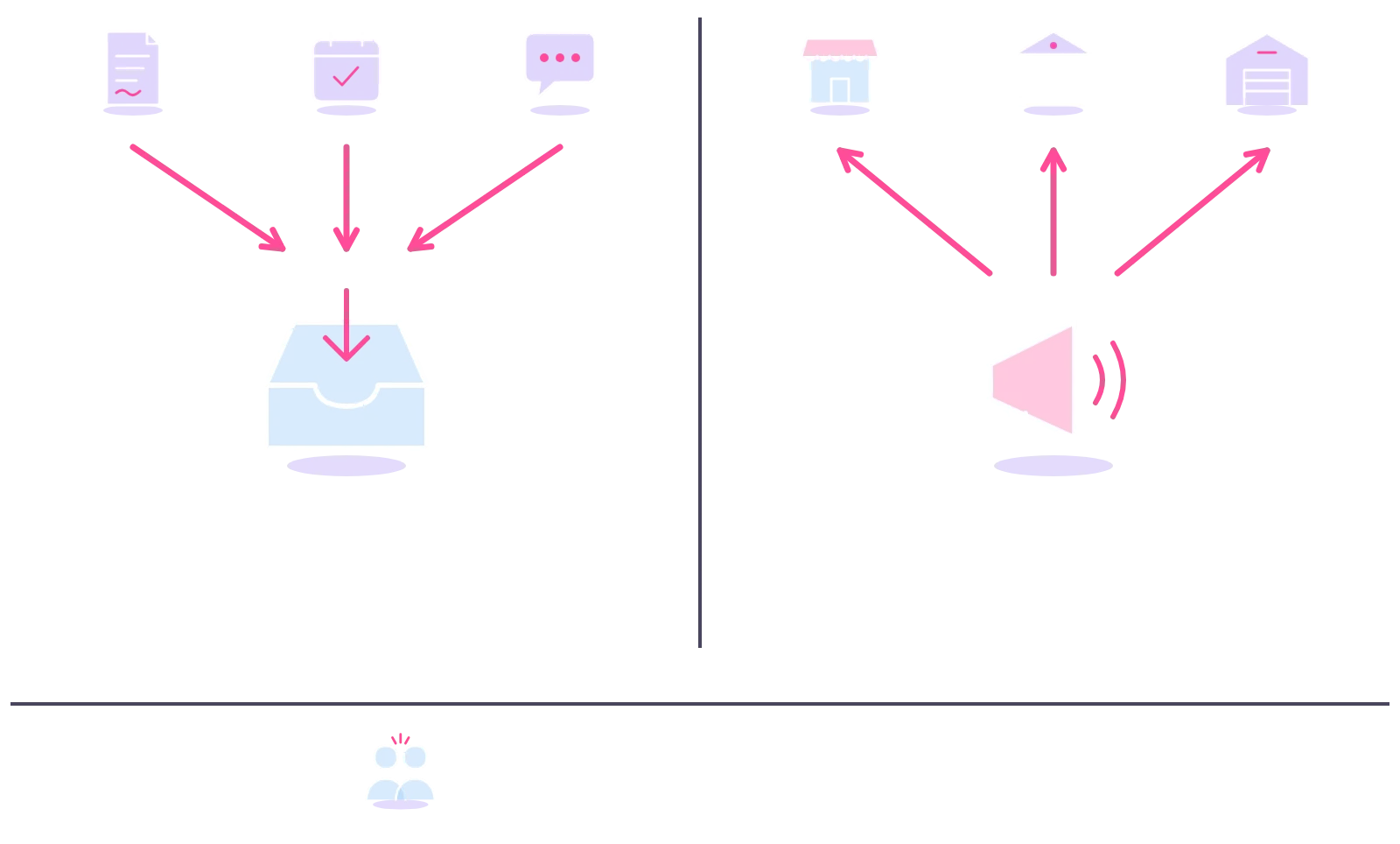
An inbound SDR responds to people who have already shown interest: form fills, demo requests, downloads, chat enquiries. Speed and good qualifying matter most. An outbound SDR starts the contact, working a list of businesses that have not enquired. Resilience and good research matter most. Many small teams have one person doing both. Our guide to inbound vs outbound lead generation explains the two approaches.
SDR teams and SDR managers
In a larger company, several SDRs form a team that feeds meetings to a group of AEs. An SDR manager hires and coaches the SDRs, sets targets, listens to calls, checks the quality of meetings and makes sure the AEs trust what they receive. In a small UK business there is usually no SDR team: there is one SDR, or none, and the owner plays the manager's role.
Skills, training and career path
Key skills
- A confident phone manner and clear, short writing
- Resilience: most outreach gets no reply or a "no"
- Curiosity: asking questions and listening to the answers
- Organisation: follow-ups, notes and CRM records kept up to date
- Enough grasp of your product to explain why a meeting is worth the prospect's time
Getting hired and improving
SDR is often a first sales job. Many people come from customer service, retail, hospitality or recruitment, where talking to strangers is part of the day. To get hired, show evidence of persistence and good communication, and be ready to role-play a short call. To get better, listen back to your own calls, ask your AE which meetings were good and why, and refine your openers and emails every week.
Is SDR the hardest sales job?
Many people who have done it would say it is among the hardest. Rejection is constant, the work is repetitive and targets are visible every day. It is also one of the best ways into sales, because it teaches prospecting, objection handling and qualifying early. For an employer, the lesson is that SDRs need clear targets, good lists and regular coaching.
What SDRs earn in the UK
There is no official UK salary figure for SDRs. The National Careers Service publishes profiles for two related roles, and these are the closest official reference points:
- Sales representative: a typical starting salary of £23,000 and £50,000 when experienced, according to the National Careers Service sales representative job profile.
- Business development manager: £28,000 as a starter and £80,000 when experienced, according to the National Careers Service business development manager job profile.
Neither is an SDR profile, so treat them as context, not as an SDR salary.
Basic pay versus on-target earnings
SDR roles are usually advertised with a basic salary and on-target earnings (OTE), which add the commission or bonus paid if the SDR hits target. The National Careers Service notes that advertised pay for sales representatives may include OTE. When you set or compare pay, keep basic and OTE separate, and write down what the bonus is paid on: meetings booked, meetings held or pipeline created.
AI SDRs and human SDRs
What an AI SDR does
An AI SDR is software that automates parts of the SDR's job: researching contacts, writing and sending emails, replying to simple responses and sometimes booking meetings. It can handle volume and work around the clock. It cannot build a relationship on the phone, judge whether an awkward answer means "not now" or "never", or handle the conversation that does not fit a script. Many businesses use automation for research and drafting and keep a person on the conversations.

Legal and deliverability risks in the UK
UK rules on direct marketing apply whoever, or whatever, sends the message. The ICO's business-to-business marketing guidance says you must not make live marketing calls to numbers registered with the TPS or CTPS without consent, and the caller must identify themselves and display a number. Sole traders and some partnerships are treated as individuals, which changes the rules. This is general information, not legal advice. On deliverability, sending large volumes of automated email from your domain can push your messages into spam folders, so whoever runs your outreach should control volume and keep a person reviewing what goes out. Our guide on whether cold calling is legal in the UK covers the rules in full.
Hiring in-house or outsourcing
When outsourcing makes sense
Hiring an SDR in-house gives you control and someone in your office culture. It also means recruitment, employer National Insurance, pension, holiday, training, management time and the risk that the hire does not work out. Outsourcing makes sense when you need consistent outreach now, do not have a sales manager to coach a new SDR, or want to test outbound before committing to a permanent hire. If you hire in-house, our SDR job description guide gives you a template to adapt.
Comparing cost and value
Compare the full cost of each option against the same outcome: qualified meetings that take place. For an in-house hire, add salary, employer costs, tools, recruitment and the time you spend managing. For an outsourced option, check what the price includes and whether the person is dedicated to you. Our guide to virtual assistant cost in the UK shows how to count both sides.
Evaluating a partner
- Is the SDR dedicated to your business or shared?
- Who builds the lead list, and who screens it against TPS and CTPS?
- Whose CRM, inbox and phone system are used?
- What counts as a qualified meeting, and is reporting on booked or attended meetings?
- Who supervises the SDR day to day, and what happens if the fit is wrong?
Outsourcing the SDR role to a managed team
How the managed team works
At Ant Assist your SDR is one dedicated VA, never shared. They are UK-managed and work full time from our own managed office in Cairo, where they are recruited, managed and supervised. They are not freelancers and not AI. They work UK business hours, 9am to 5pm Monday to Friday, from 20 hours a week up to a full 40-hour VA. If the fit is wrong, we replace the VA without restart cost. If the role is wider than SDR work, lead generation support can cover more of the pipeline.
The introductory rate is £5 per hour for the first 6 months on the Entry tier (3 months on Mid, 1 month on Expert). After that, lead generation Entry is £5.50 per hour full time (£880 a month for 160 hours) or £6.50 per hour part time (£520 a month for 80 hours). Put your hours into the calculator to compare with an in-house hire.
What stays in-house
Your SDR handles list research, outreach, follow-up, qualifying, booking and CRM updates. You keep the offer, the definition of a qualified meeting and the sales conversation. Work happens in your own CRM and accounts, under NDAs and data-processing agreements, with password managers and access you can revoke. See how lead data is kept secure. If you need sales support beyond the SDR role, the virtual sales assistant guide explains it.



Questions about the SDR role
Didn't find your answer? Browse more common questions in the Help Center.
A dedicated SDR for your pipeline.
UK-managed, UK hours, from £5 per hour.
A free 15-minute call, no obligation. Or get an instant estimate with the calculator.