How to choose the best answering service for small business
The best answering service depends on your calls: pooled answering suits a few simple calls a week; a dedicated receptionist suits a phone that rings steadily.
Tools our VAs use for this


For most UK small businesses the choice is between a pooled live answering service, which suits a few simple calls a week, and a dedicated virtual receptionist, which suits a phone that rings steadily with calls that need your diary, your customer history or your tone. Before you sign, compare the hours covered, who actually answers, how messages reach you, what the contract ties you to and how callers' data is protected. Price follows the model, so get the model right first.
On this page
The types of answering service
Every answering service sits in one of five models: pooled live answering, message taking only, a dedicated virtual receptionist, AI or automated answering, or voicemail and call forwarding. Knowing which one you are buying is the first step, because the same marketing words ("virtual receptionist", "live answering") are used for all of them. The five run from a basic answering service to a dedicated customer service assistant.
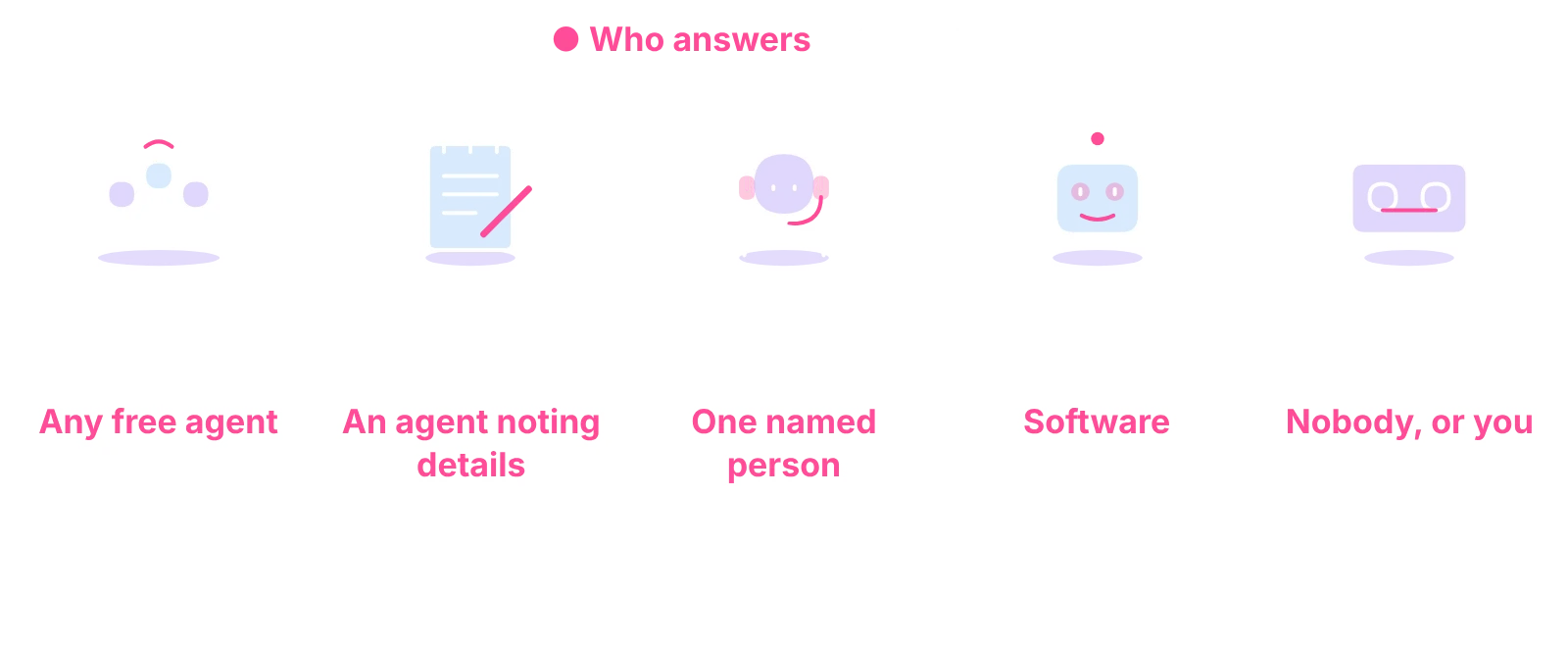
| Type | Who answers | Best for | Watch for |
|---|---|---|---|
| Pooled live answering | Whichever agent in a shared team is free | A few simple calls a week | A different voice every call, scripted answers |
| Message taking only | An agent who records the caller's details | Callers who only need a call back | No transfers or bookings on most plans |
| Dedicated virtual receptionist | One named person who learns your business | A steady phone with real decisions in it | Hours outside the agreed window |
| AI or automated answering | Software | Routing and simple questions | Callers who want a person |
| Voicemail and call forwarding | Nobody, or you on your mobile | Very low call volume | Callers who hang up at the beep |
Pooled live answering is the classic model: a team of agents answers calls for many businesses from a script on screen. It is quick to start and works when calls are simple.
Message taking is the narrowest service: the caller's name, number and reason, sent to you. Our guide to the message taking service covers what a good message contains and when message taking is enough.
A dedicated virtual receptionist is one person on your line during the hours you set, working from your rules and your systems. This is the model we provide: a virtual receptionist service built on one dedicated receptionist instead of a rotating pool.
AI answering uses software to greet, route and answer simple questions. Whether that suits your callers is a separate decision, set out in our guide to AI receptionist vs human receptionist.
Voicemail and forwarding cost nothing extra but leave the caller deciding whether to wait for you.
Handling missed calls and urgent requests
Before you choose, measure your own missed calls. Your phone system's call log will usually show calls missed and calls that went to voicemail. Count them for a normal fortnight and note how many callers left a message. That tells you how much cover you need and when. To track results once cover is in place, look at customer support KPIs for small teams.
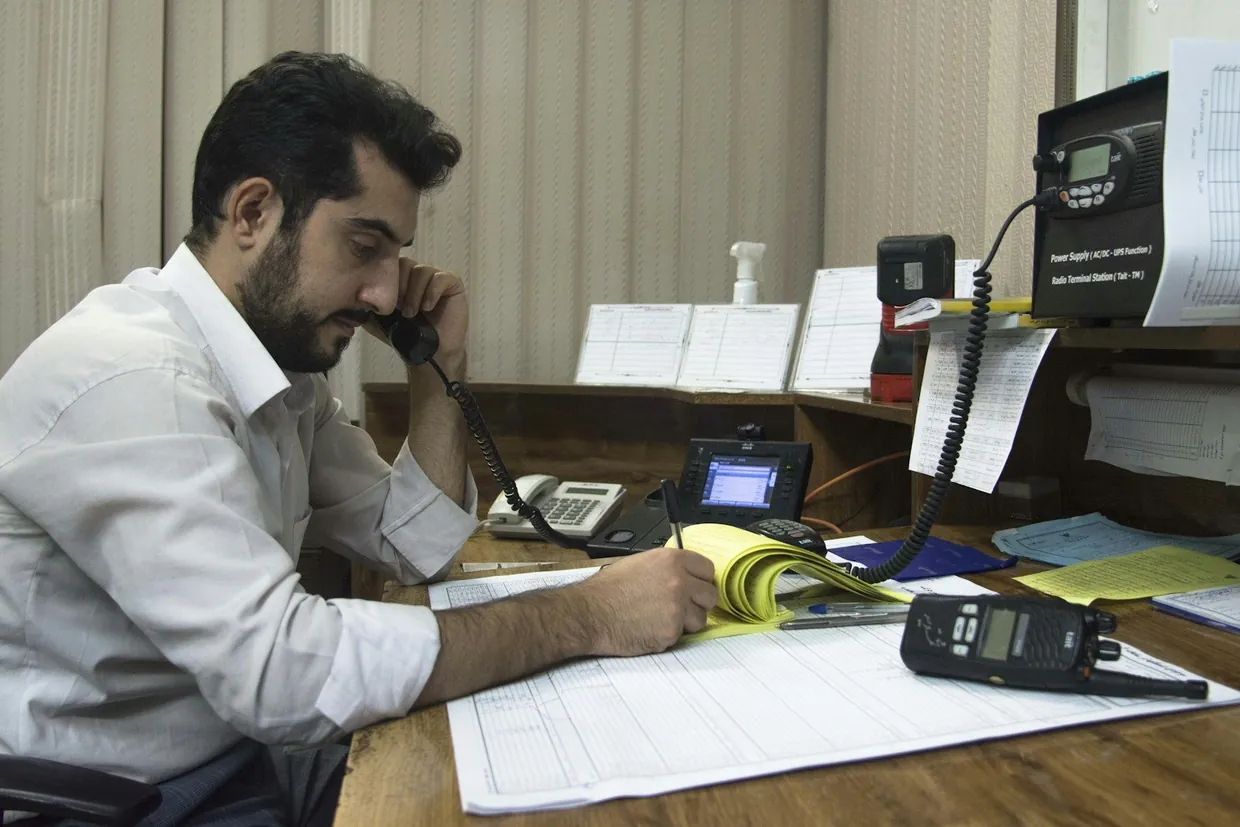
Then decide what counts as urgent: a customer with a burst pipe, a patient cancelling today, a buyer ready to order. Give the service a short written rule for each, saying who to call, in what order and what to do if nobody answers.
What an answering service costs
UK answering services charge per call, per minute, by monthly bundle or by the hour for a dedicated receptionist; there is no reliable published average, so be wary of any page quoting one. What you can compare is how each provider charges.
Per-call, per-minute and monthly plans
- Per call: you pay for each call answered. Simple to understand; check how a "call" is defined.
- Per minute: you pay for the time on the phone. Fair for short calls; long calls add up quickly.
- Monthly bundles: a set number of calls or minutes for a fixed fee, with a charge for anything over.
- Hourly, for a dedicated receptionist: you pay for a person's time, whatever the number of calls. This suits a steady phone, and the receptionist can do other work between calls.

What changes the price
Call volume, the hours you need covered, how long calls last, how much the receptionist does on each call (a message, a transfer, a booking) and whether you need evening or weekend cover. For a full picture of what a dedicated receptionist costs in the UK, see our guide to virtual receptionist pricing UK.
Set-up fees, wrong numbers and sales calls
Ask whether you pay for calls you did not want: wrong numbers, cold sales calls, silent calls and hang-ups. Ask about set-up fees, charges for transferring calls, for appointment booking, for out-of-hours calls and for exceeding your bundle. The cheapest headline price is often the one with the most extras.
What to compare between services
Compare answering services in this order: hours and call coverage, staff and call quality, location and supervision, contract length and flexibility, data protection, and fit for your type of business. Each one rules options in or out before price comes into it.
Hours and call coverage
Start with when your calls arrive. A business whose phone rings in office hours needs different cover from one whose customers ring in the evening or at weekends. Ask whether the service covers all calls, overflow when you are busy, lunch and holidays, or out-of-hours only. Our guide to the after-hours answering service explains evening, weekend and overnight cover in detail.
Staff and call quality
Ask who will pick up your calls. In a pooled service it is whichever agent is free; with a dedicated receptionist it is one person. Then ask what they work from: a short script, or a fuller brief with your services, prices, common questions and escalation rules. Ask to hear how they would handle your three most common calls, and listen for whether the answer sounds like your business.
Location and supervision
Ask where the people answering your calls work, who supervises them, and how quality is checked. "Remote" can mean a managed office with a supervisor in the room or a freelancer at a kitchen table. You are entitled to know which.
Contract length and flexibility
Ask for the minimum term, the notice period, what happens if call volume rises or falls, and whether you can change package without starting again. A low monthly price with a long lock-in can cost more than a higher price you can adjust. If the wider question is whether to hand this work over at all, read about how to outsource customer service for a small business.
Data protection and call recordings
The service will hear and record your callers' personal details, so it handles personal data on your behalf. The ICO's guidance on what needs to be included in the contract between a business and a processor sets out the terms that contract must cover under UK GDPR, including processing only on your documented instructions, confidentiality and appropriate security. Ask for the provider's processor contract before you forward a single call. Ask too whether calls are recorded, who can hear the recordings and how long they are kept. This is general information, not legal advice.
Fit by business type
- Trades and field businesses: you miss calls while on a job, and most callers want a quote or a visit booked. Look for a service that can book into your diary.
- Clinics, salons and practices: the diary is the business. Look for someone who can book, move and confirm appointments inside your rules.
- Professional services: callers expect a knowledgeable first answer and confidentiality. Look for a dedicated receptionist with a clear escalation route. Law firms have their own guide: virtual receptionist for law firms.
- Online shops: phone calls arrive alongside chat and email. Look for one person who can cover all three. Reply times and tone for the chat side are covered in live chat best practices for small business.
How provider types compare
Large pooled services suit long hours and simple calls, specialist services suit sectors with their own vocabulary, dedicated receptionists suit businesses wanting the same person every time, and software suits routing. Most comparison pages on this topic rank the provider that wrote them first. We do not rank named providers. What follows is how to compare them yourself.
Which type suits which business
Large pooled services suit businesses that want long opening hours and simple call handling at a predictable price. Smaller specialist services suit a sector with its own vocabulary. Dedicated receptionist services suit a business that wants the same person every time and work done beyond the call itself, such as diary updates, CRM notes and follow-up emails. Software services suit businesses that mostly need routing.

How to read a provider's own comparison page
When you read a "best answering services" list, check who published it, whether the publisher appears in its own list, and whether prices shown include VAT, set-up fees and extras. Treat ratings and award badges as marketing until you have checked them yourself. Then put each shortlisted provider through the checklist below.
What to ask before signing
Copy this list into your notes and ask every provider the same questions.
- Who will answer my calls, and will it be the same person each time?
- Which hours are covered, and what does cover outside them cost?
- How do messages reach me, and how quickly?
- Can you transfer calls to me or my team, and what happens if nobody picks up?
- Can you book into my diary and update my CRM?
- What do you charge for wrong numbers, sales calls and very short calls?
- Is there a set-up fee, a minimum term and a notice period?
- Where do your staff work, and who supervises them?
- Can I see your processor contract and your security arrangements?
- What happens if I am unhappy with the person answering my calls?
Using a virtual receptionist instead of an answering service
Ant Assist provides one dedicated receptionist for your business, never shared with another client. Your receptionist is a person, not software and not a freelancer: recruited, managed and supervised full time in Ant Assist's own managed office in Cairo, under a UK-managed service. Standard cover is UK business hours, 9am to 5pm Monday to Friday, with extended hours and weekend cover available at additional cost.
You can start at 20 hours a week and go up to a full 40-hour VA. The introductory rate is £5 per hour for the first 6 months on the Entry tier (3 months on Mid, 1 month on Expert). After that, customer service Entry is £5.95 per hour full time (£952 a month for 160 hours) or £6.50 per hour part time (£520 a month for 80 hours). Put your own hours into the calculator to see the cost.
If the fit is wrong, we replace the VA without restart cost. Every VA works under NDAs and data-processing agreements, with access through password managers that you can revoke. The initial term is 12 months, including a 3-month probation in which you can end the engagement without penalty. After 12 months it continues monthly with 30 days' notice. If you also want chat and email covered, a customer service virtual assistant is the wider option.



Answering service FAQs
Didn't find your answer? Browse more common questions in the Help Center.
One receptionist. Every call in your name.
A dedicated virtual receptionist, from £5 per hour. Book a free call.